
LESSON 01
Let's Go!
Critical thinking
Clarity & Communication · Decomposition · Decision Making · Questioning
AI literacy
Capabilities vs. Limitations
WLKR Learning Course
Critical Thinking in the Age of AI is a 20-lesson K–12 course from WLKR.learning. Twenty immersive, project-based lessons teach students to think with AI—not just consume its answers. Learners build judgment, evaluation, and reasoning while practicing clear communication, developing a point of view, and navigating AI literacy, bias, and safety.
LESSON 01
Critical thinking
Clarity & Communication · Decomposition · Decision Making · Questioning
AI literacy
Capabilities vs. Limitations

LESSON 02
Critical thinking
Decomposition · Reasoning · Questioning
AI literacy
How Generative AI Works · Capabilities vs. Limitations

LESSON 03
Critical thinking
Decomposition
AI literacy
Capabilities vs. Limitations · Context Windows & Memory Management

LESSON 04
Critical thinking
Questioning · Clarity & Communication
AI literacy
Strategic Interaction & Prompting

LESSON 05
Critical thinking
Evidence & Evaluation · Reasoning · Revision & Metacognition
AI literacy
Verification & Critical Thinking · Iterative Collaboration & Feedback

LESSON 06
Critical thinking
Clarity & Communication
AI literacy
Prompt Engineering as Communication

LESSON 07
Critical thinking
Revision & Metacognition
AI literacy
Iterative Collaboration & Feedback

LESSON 08
Critical thinking
Decomposition · Decision Making
AI literacy
Context Windows & Memory Management

LESSON 09
Critical thinking
Reasoning · Decision Making
AI literacy
Strategic Interaction & Prompting
LESSON 10
Critical thinking
Decision Making
AI literacy
Strategic Interaction & Prompting · Context Windows & Memory Management
LESSON 11
Critical thinking
Evidence & Evaluation
AI literacy
Hallucinations & Fact-Checking
LESSON 12
Critical thinking
Evidence & Evaluation · Questioning
AI literacy
Bias, Drift & Data Lineage
LESSON 13
Critical thinking
Evidence & Evaluation
AI literacy
Verification & Critical Thinking
LESSON 14
Critical thinking
Revision & Metacognition
AI literacy
Bias, Drift & Data Lineage · System Capabilities & Tool Augmentation
LESSON 15
Critical thinking
Revision & Metacognition
AI literacy
Verification & Critical Thinking
LESSON 16
Critical thinking
Decision Making · Decomposition
AI literacy
System Capabilities & Tool Augmentation
LESSON 17
Critical thinking
Decision Making · Questioning
AI literacy
Data Privacy, IP & Security
LESSON 18
Critical thinking
Reasoning · Evidence & Evaluation
AI literacy
AI Ethics & Responsible Deployment · Data Privacy, IP & Security
LESSON 19
Critical thinking
Decomposition · Revision & Metacognition
AI literacy
Technical Integration & Multi-Agent Workflows
LESSON 20
Critical thinking
Full Spectrum Synthesis
AI literacy
Full Spectrum Synthesis
Questioning
How productively the student asks for help—specific questions with detail.
Clarity & Communication
How clearly they instruct and respond with enough detail—instructional clarity, not spelling or grammar craft.
Decomposition
Breaking a multi-part challenge into smaller steps.
Reasoning
Supporting a choice or claim with a reason and owning that stance—not only repeating systemic language.
Evidence & Evaluation
Tying a decision to something noticed in the scene or lesson and checking that it still fits.
Decision Making
Comparing options or consequences before choosing rather than picking without weighing trade-offs.
Revision & Metacognition
Changing approach after a miss—returning to a claim with new wording, improving later asks, or adjusting strategy.
Fundamentals & Mechanics
Strategic Interaction & Prompting
Verification & Critical Thinking
Technical Integration & Workflows
Ethics, Security & Governance
Every lesson sits inside a core standards environment—aligned to ISTE, CSTA, CCSS, and NGSS—so critical thinking and AI literacy grow alongside the skills schools already measure.
Personalized paths that reinforce mastery
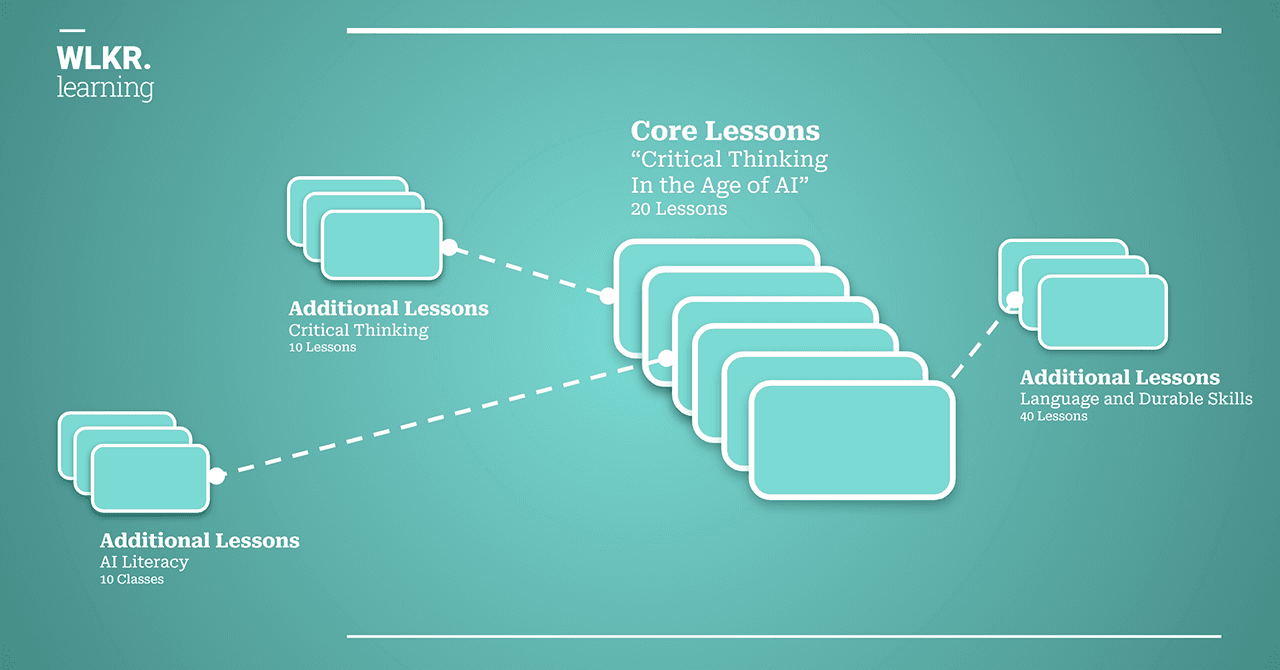
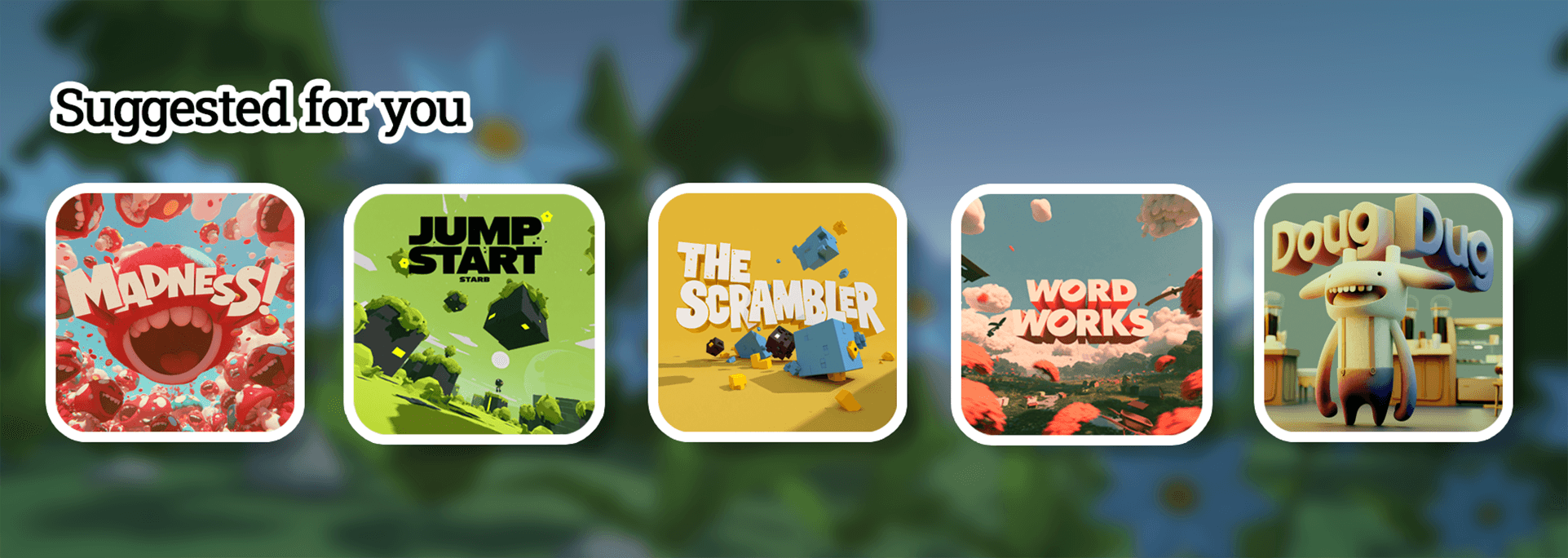
The course centers on 20 core Critical Thinking in the Age of AI lessons. The adaptive platform supports each student’s pace—and depending on their performance, they may be offered review on important skills and concepts through targeted minigames and additional lessons.
It is a 20-lesson student course from WLKR.learning that teaches judgment, evaluation, reasoning, and AI literacy through immersive, project-based lessons—so students learn to think with AI rather than passively consume answers.
The supplemental course is built for 5th–7th grade classrooms. Educators use it as a standards-aligned WLKR.learning curriculum path for students—not as WLKR.University professional development.
There are 20 core lessons. Depending on student performance, the adaptive platform may also offer review on important skills and concepts through targeted minigames and additional lessons.
Students build critical thinking skills (Questioning, Clarity & Communication, Decomposition, Reasoning, Evidence & Evaluation, Decision Making, and Revision & Metacognition) alongside AI literacy skills across fundamentals, prompting, verification, technical workflows, and ethics.
Lessons sit in a core standards environment aligned to ISTE, CSTA, CCSS, and NGSS, so critical thinking and AI literacy grow alongside skills schools already measure.
Adaptive learning supports each student’s pace. Based on performance, students may receive minigame-based review and additional Critical Thinking, AI Literacy, or Language Quiz practice connected to the 20 core lessons.
Ready to bring an AI learning platform to your school or district? Book a 20-minute demo, or send a message about pricing and goals — we will follow up. We respect your privacy — your information is yours, and we will never share it.